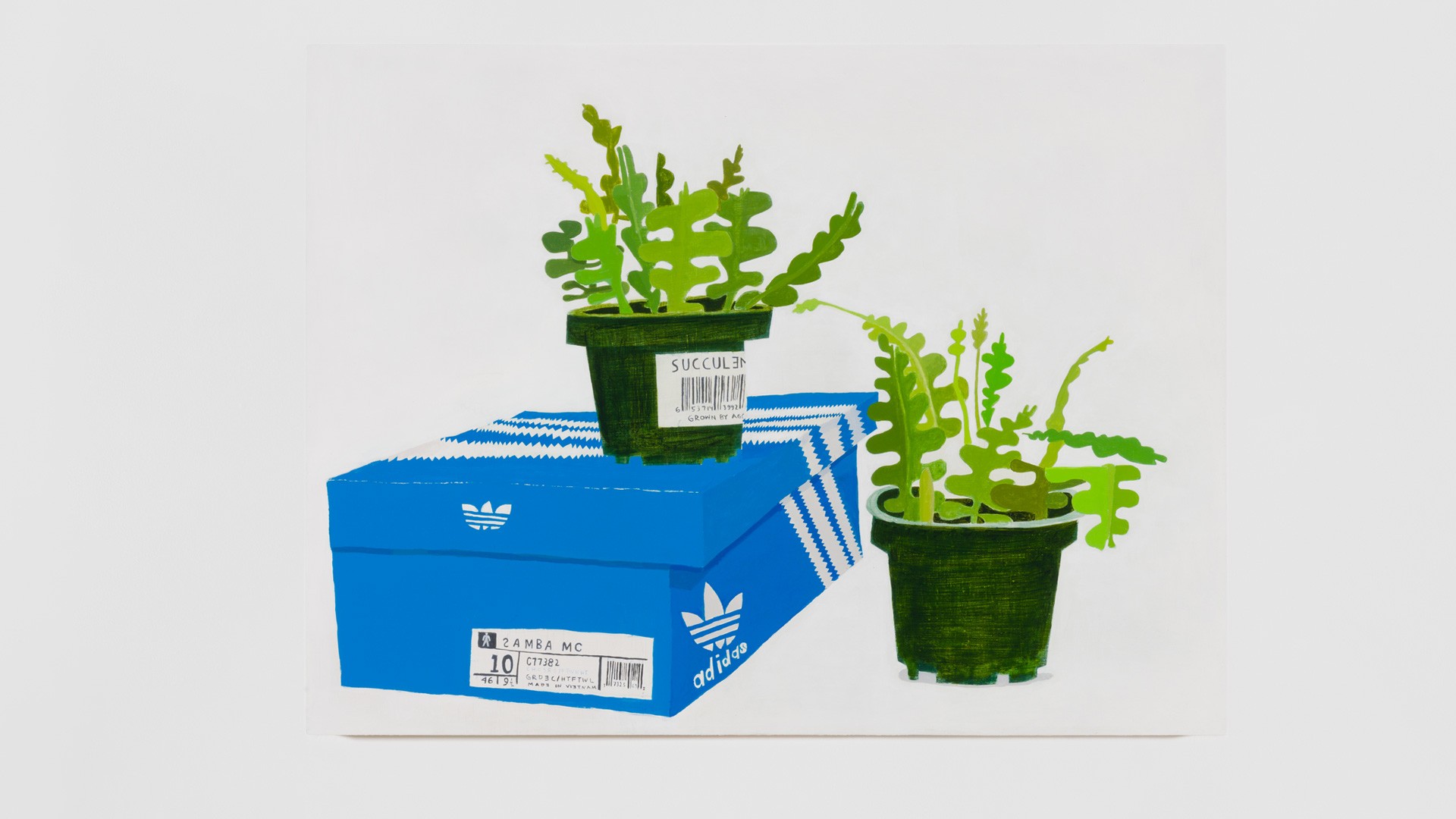
Manuel López, One Box, Two Plants, and Three Stripes
(Still Life in Blue and Green)
Acrylic on wooden panel
18 × 24 inches. 2021
Courtesy of the artist and Charlie James Gallery, Los Angeles.
Photo credit: Yubo Dong, ofstudio.
Everyday Life on Canvas
Experimental
Art Gallery
The Charle James gallery presents the work of Manuel López, an artist who brings his everyday world to the canvas, saturated with color.
author
Luciana Trost
Date
April 29, 2026
Share
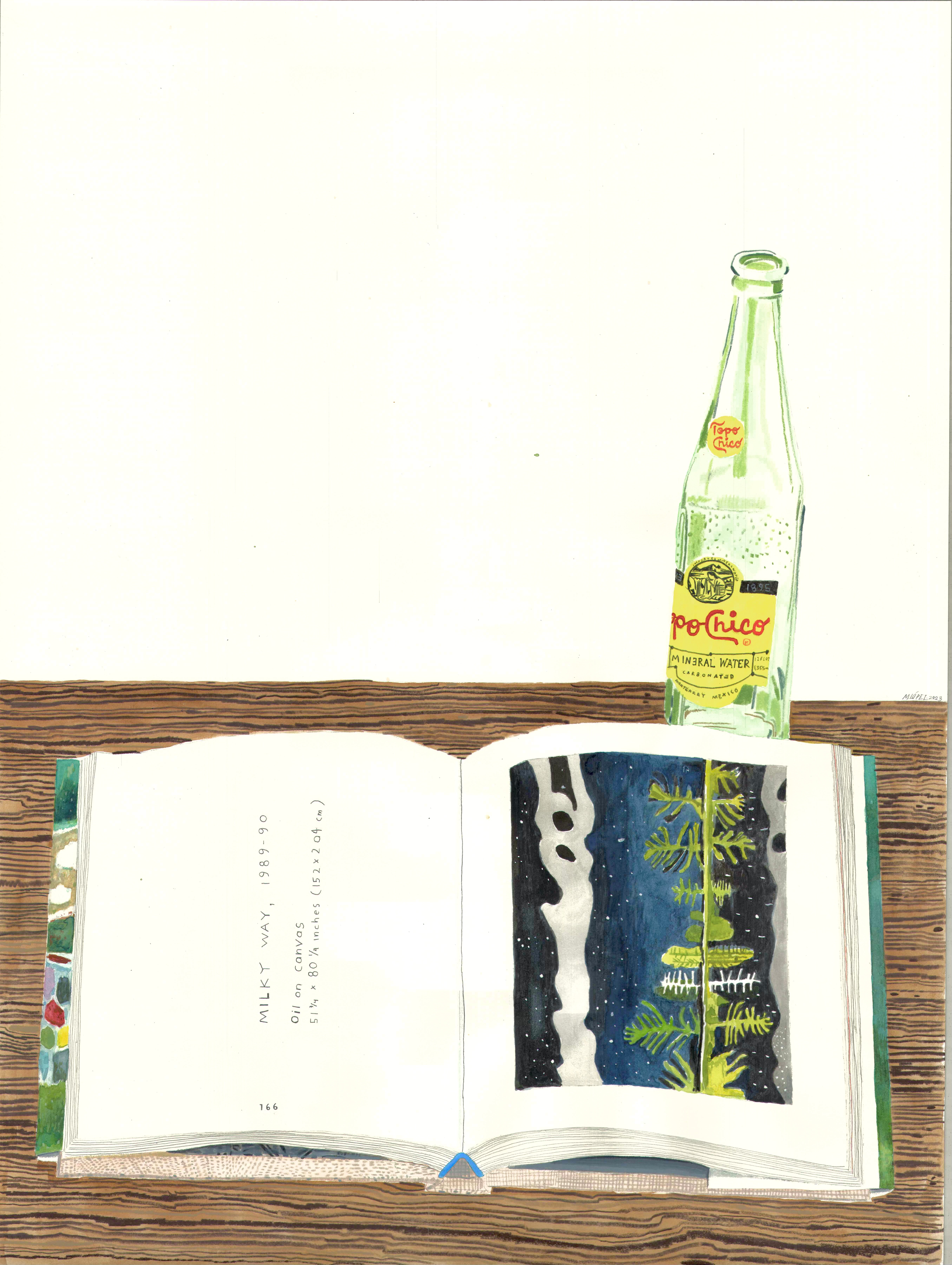
Manuel López, Peter Doig and a Topo
Graphite, colored pencil, watercolor, and
gouache on vellum
24 × 18 inches.
2023
Courtesy of the artist and Charlie James Gallery, Los Angeles. Photo credit: Yubo Dong, ofstudio.
For decades, daily life—routine life—and the art world have sought to draw closer—even to merge—to form an integrated whole that should never have been separated in the first place, understanding art as an essential part of life from which no human being can escape. Emblematic movements that have pursued this aim include conceptual art, the ready-made, and Pop Art of the 1950s, 60s, and 70s.
Manuel López, a native of Los Angeles, California, is among those artists who summon the mundane to be re-presented as something new, as an act of creation; to look at the same things differently, with a changed gaze. In other words, he unfolds everyday life as a means of making art. The presence of the landscape of his native city and its interaction with Latin culture, more precisely Mexican culture, is evident in much of his work. Streets set on hills and lined with palm trees across nearly their entire length, along with the names of those neighborhoods in the captions, insistently remind us—almost like a quiet confidence shared between viewer and artist—that we are in Los Angeles.
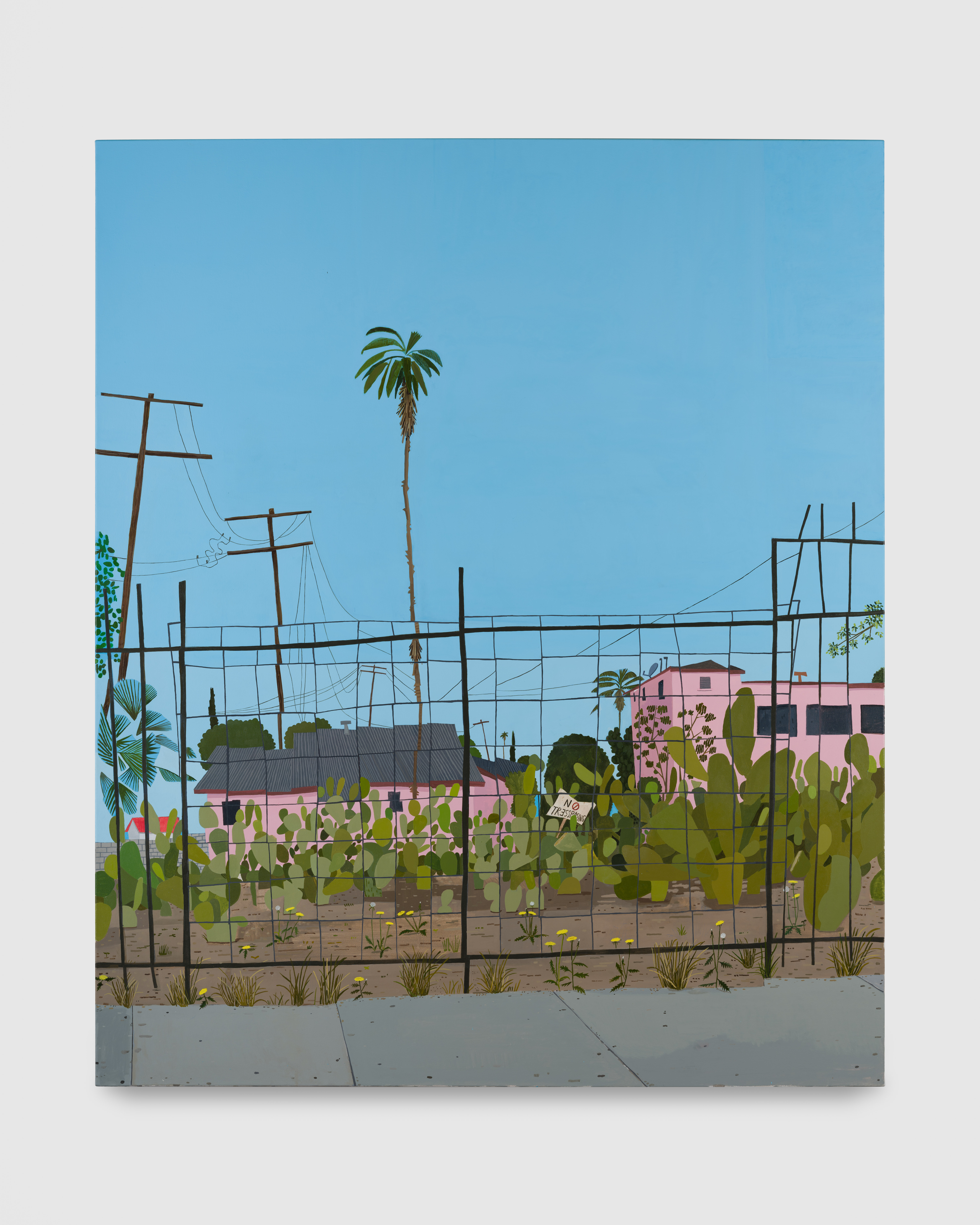
Manuel López, Terreno con nopales
Acrylic on canvas
70 × 60 inches
2024
Courtesy of the artist and Charlie James Gallery, Los Angeles. Photo credit: Yubo Dong, ofstudio.
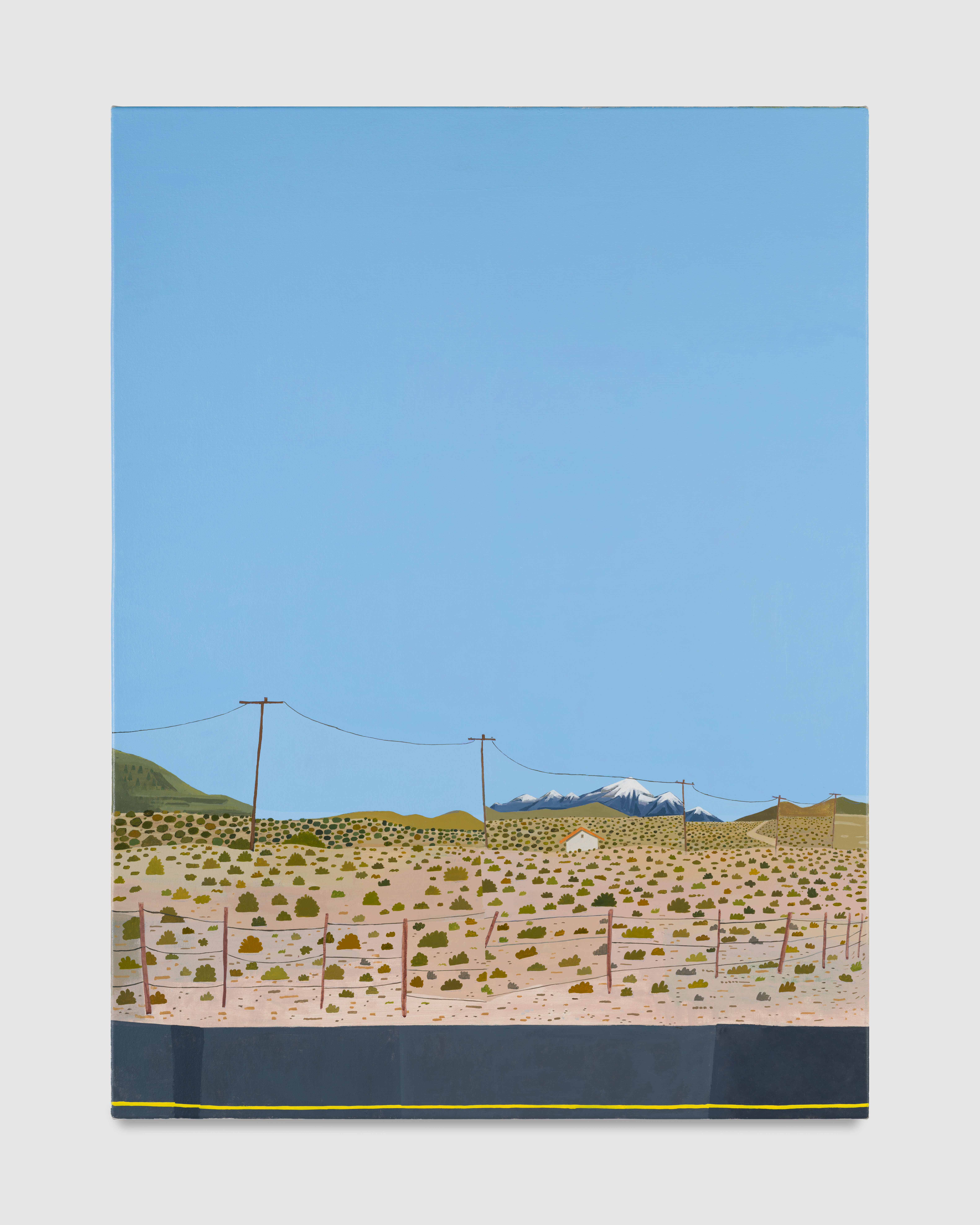
Manuel López, Southwest Roadtripping
Acrylic on canvas
49 × 35.5 inches
2024
Courtesy of the artist and Charlie James Gallery, Los Angeles. Photo credit: Yubo Dong, ofstudio.
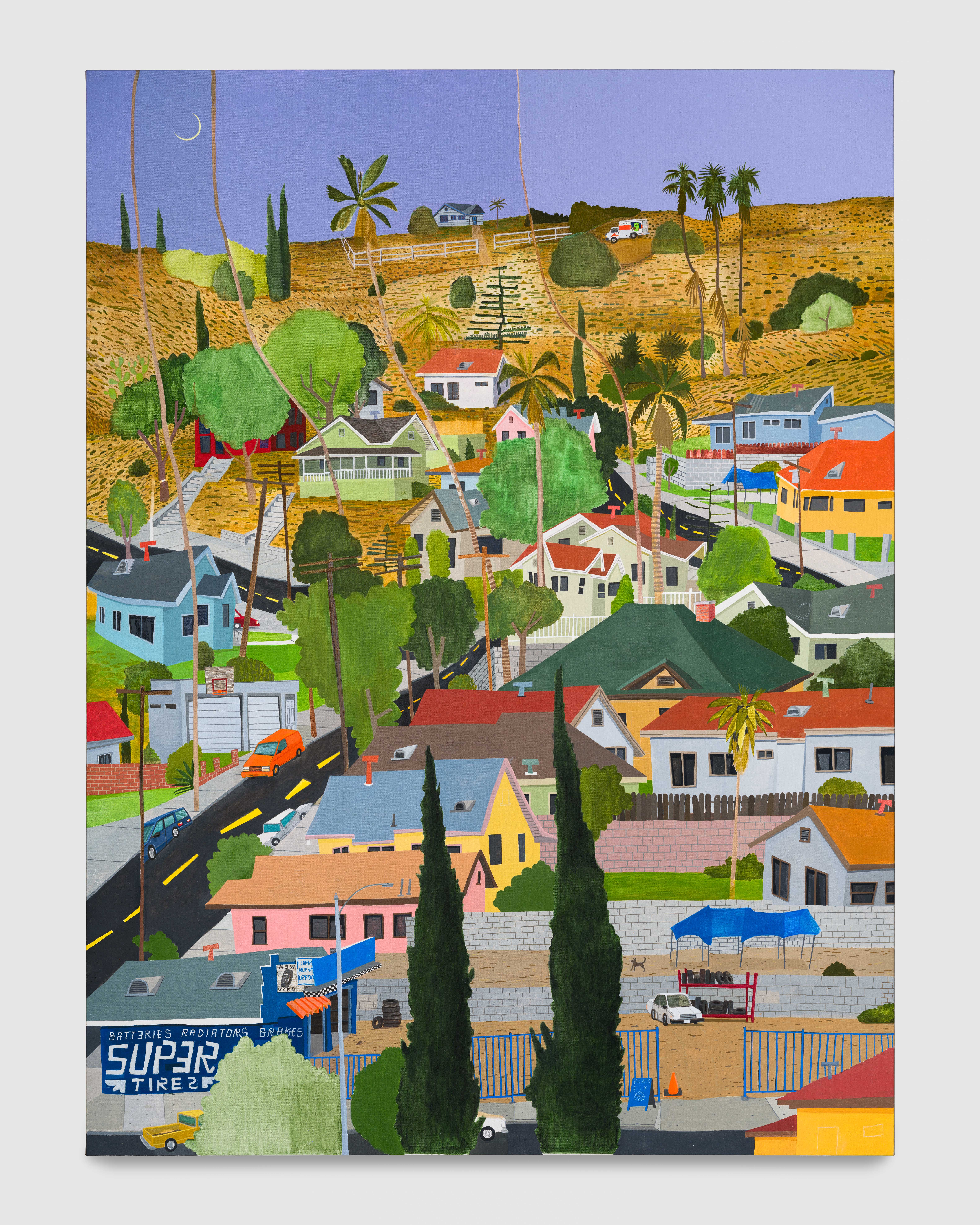
Manuel López, El Sereno Landscape (The Place of the Flowers)
Acrylic on canvas
86 × 72 inches
2024
Courtesy of the artist and Charlie James Gallery, Los Angeles. Photo credit: Yubo Dong, ofstudio.
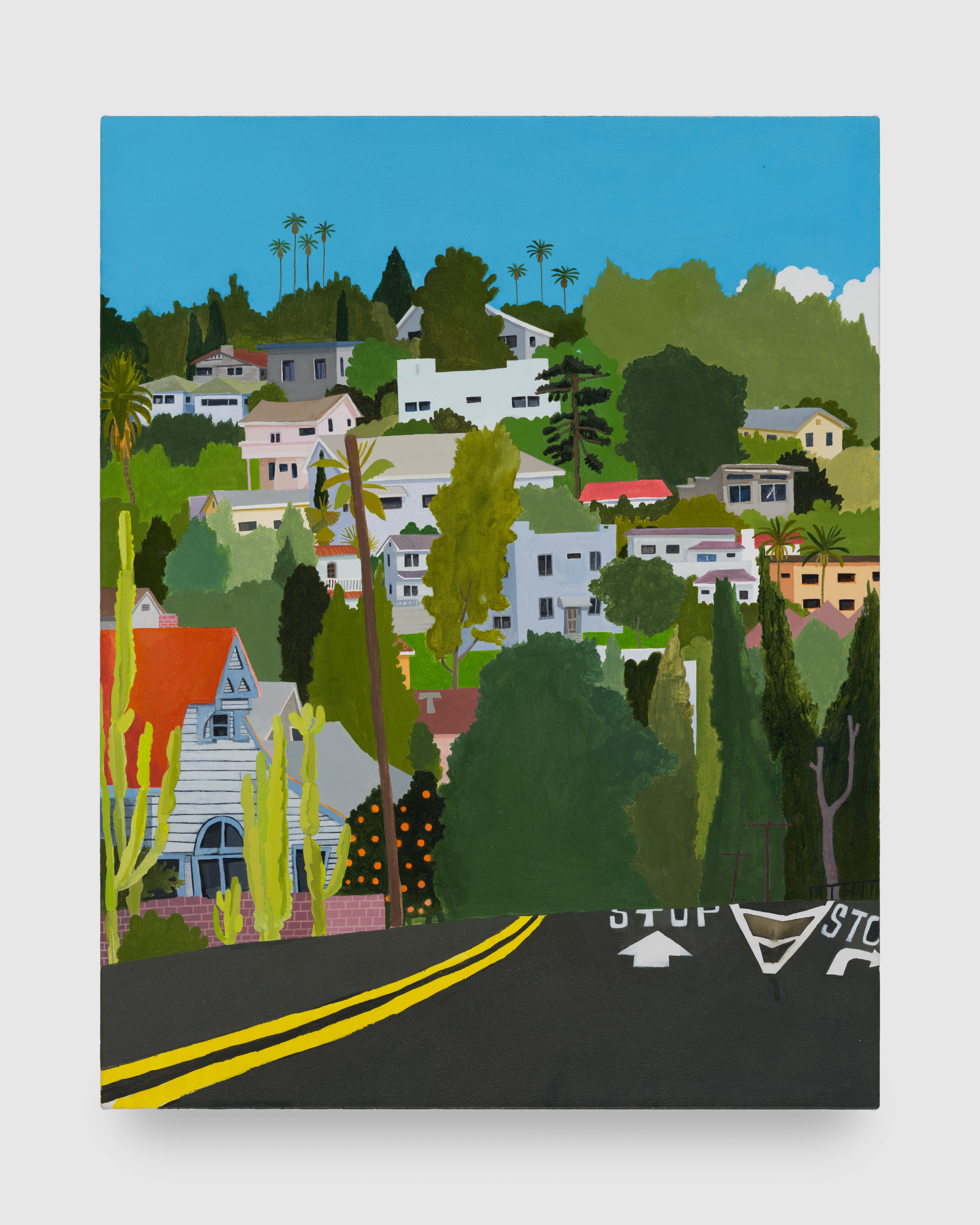
Manuel López, Crisp Saturday morning (After a good hard rain)
Acrylic on canvas
28 x 22 inches
2025
Courtesy of the artist and Charlie James Gallery, Los Angeles. Photo credit: Yubo Dong, ofstudio.
López’s technique, with its fragmented figures and distorted perspectives that generate optical illusions, clearly recalls Cubism—as an avant-garde movement—and Pop Art—as a
post-avant-garde one—both of which sought to break with the traditional framework of “proper” execution in the visual arts. Vivid, contrasting colors stand out, as do clearly defined figures and forms, with geometry playing a central role. Likewise, the inclusion of the names of certain mass-market consumer brands, such as soft drinks, beers, cigarettes, or athletic shoes, is easily recognizable on his canvases and, we understand, serves to bring us closer to the everyday world in which López lives and, of course, we do as well—perhaps as a subtle wink.
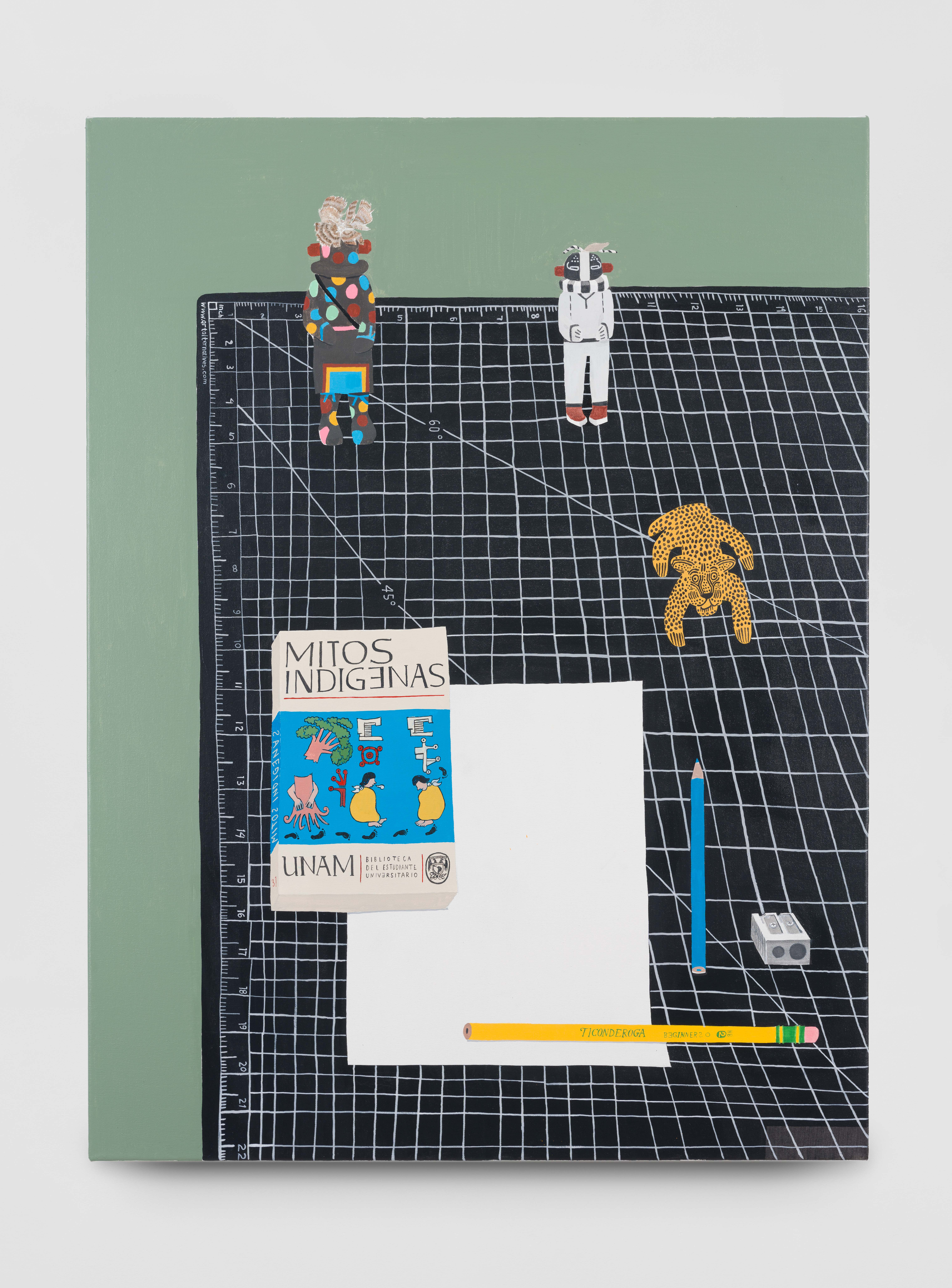
Manuel López, Outside of Time and Space (The Stories in the Story)
Acrylic on canvas
48 × 36 inches
2023
Courtesy of the artist and Charlie James Gallery, Los Angeles. Photo credit: Yubo Dong, ofstudio.
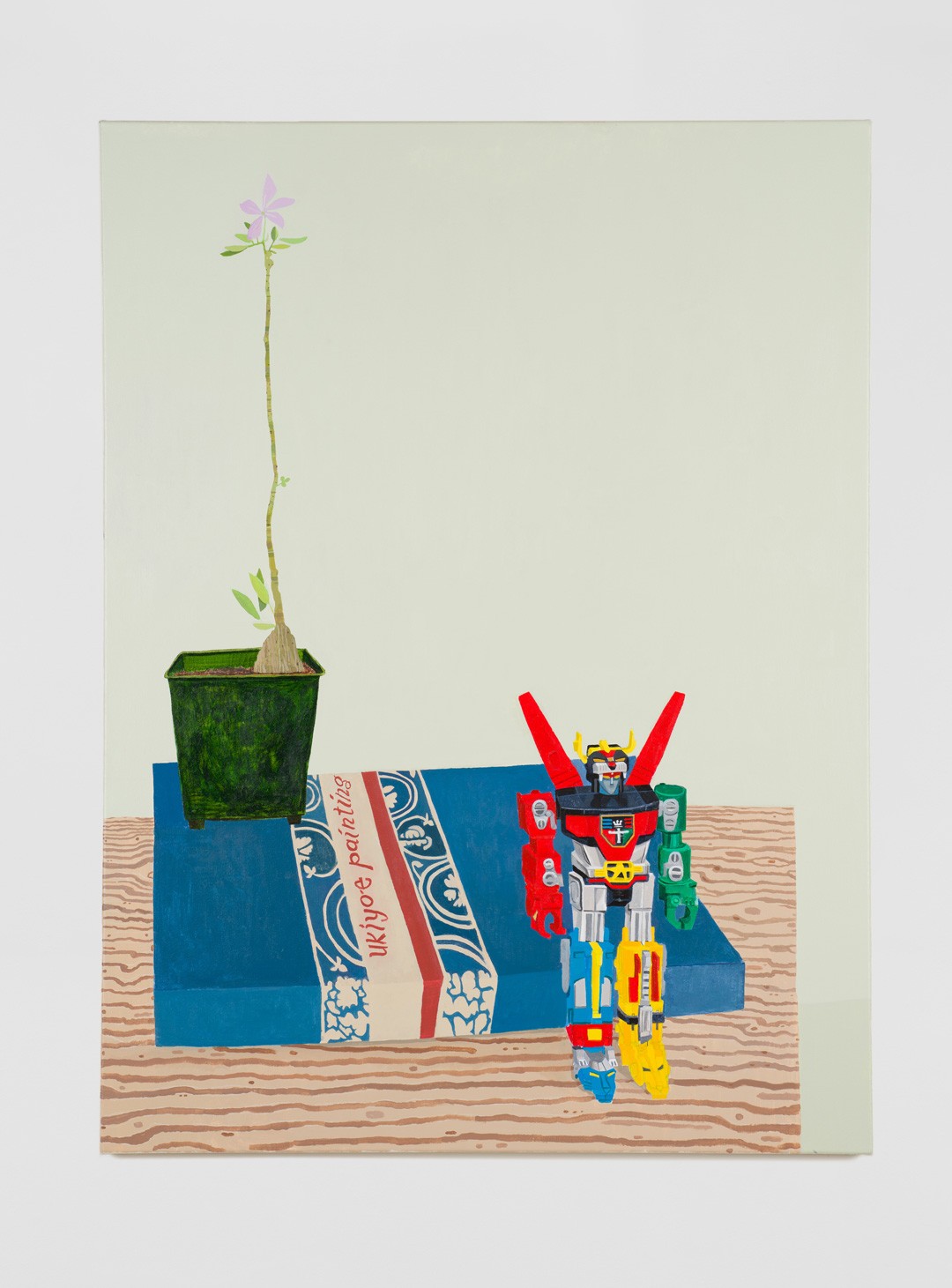
Manuel López, Lone Flower, Book, and Voltron
Acrylic on canvas
48 × 36 inches
2022
Courtesy of the artist and Charlie James Gallery, Los Angeles. Photo credit: Yubo Dong, ofstudio.
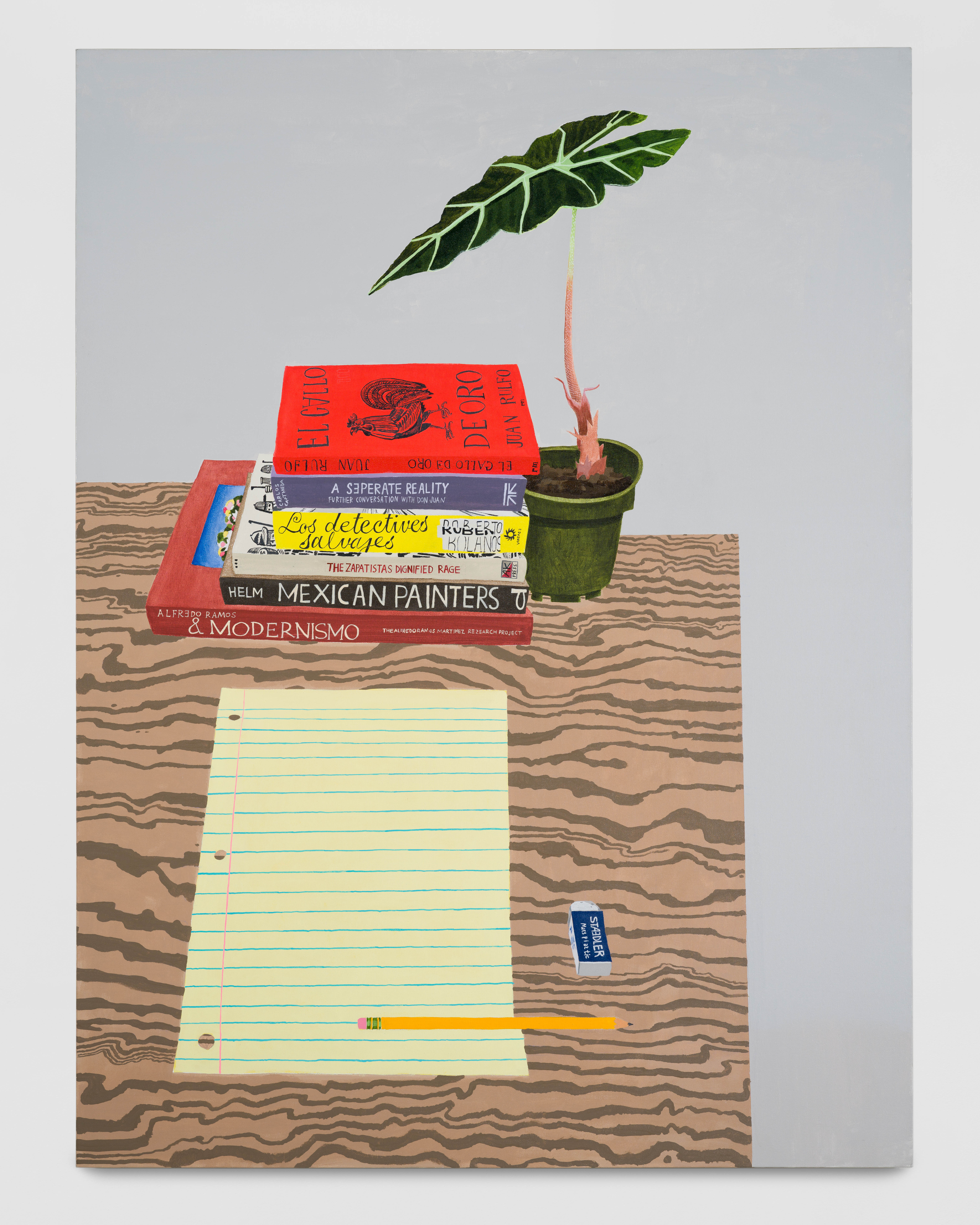
Manuel López, Where Do I Begin? (Books, Plant, and Blank Paper)
Acrylic on canvas
48 × 36 inches
2023
Courtesy of the artist and Charlie James Gallery, Los Angeles. Photo credit: Yubo Dong, ofstudio.
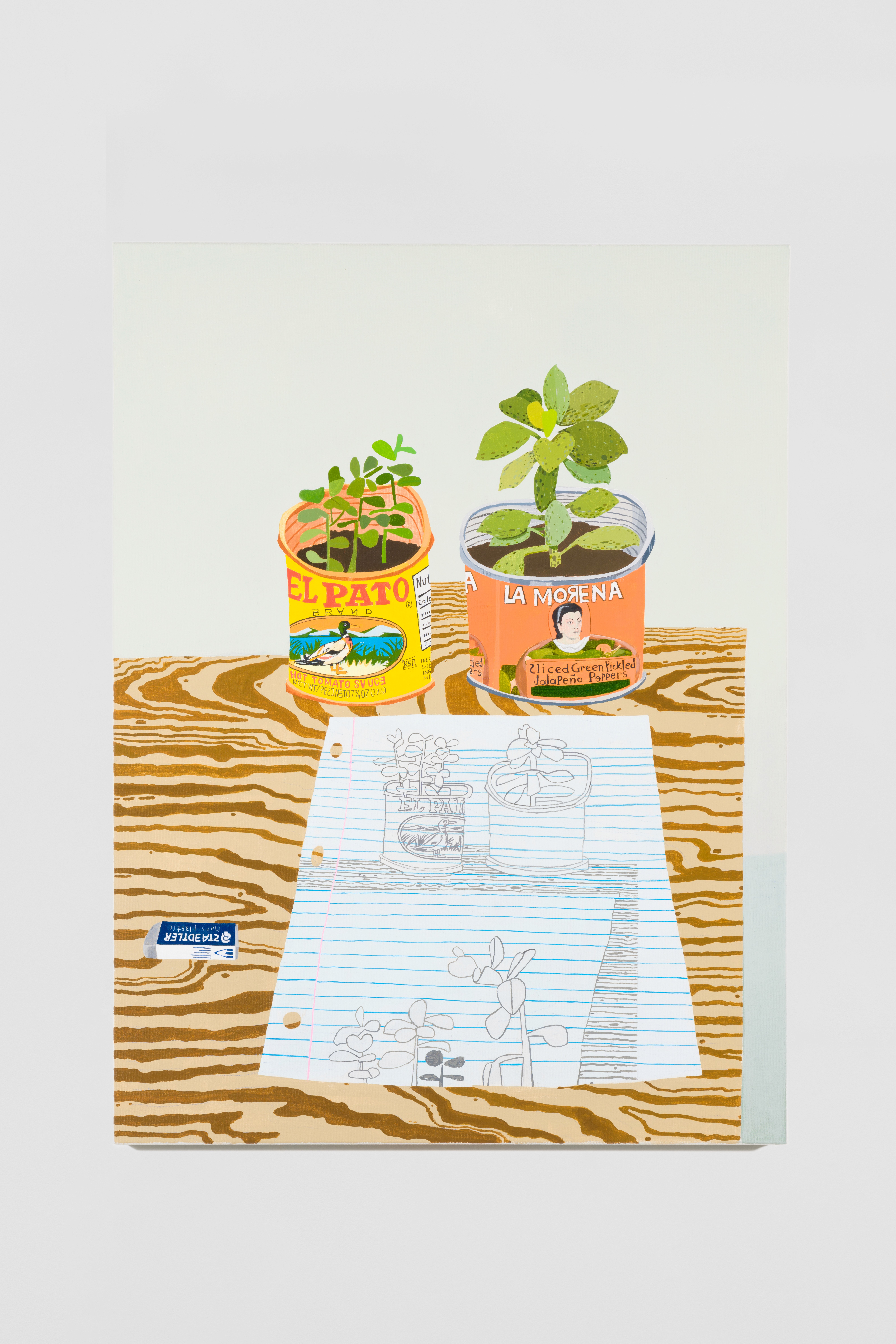
Manuel López, El Pato, La Morena, Plantitas, y un Dibujo (Still Life—Quack Quack)
Acrylic and oil on canvas
40 × 30 inches
2021
Courtesy of the artist and Charlie James Gallery, Los Angeles. Photo credit: Yubo Dong, ofstudio.
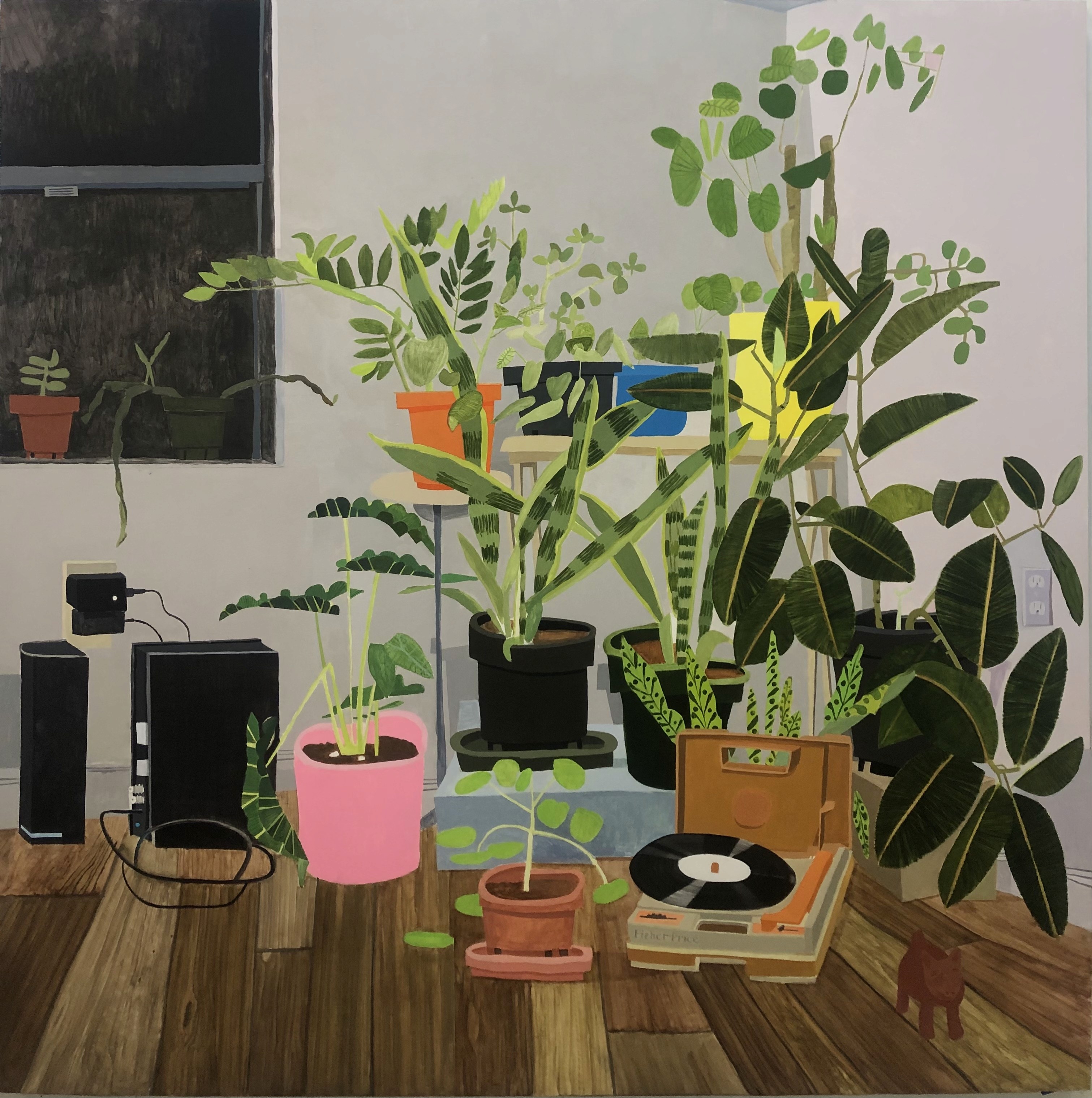
Manuel López, Modem, Router, Plants, Toy Record Player, and Dog Figure (So What’s the WiFi Password?)
Acrylic on wooden panel
60 × 60 inches
2021
Courtesy of the artist and Charlie James Gallery, Los Angeles. Photo credit: Yubo Dong, ofstudio.
“From a bird’s-eye view,” López’s work invites us into what could be the city where he lives, his neighborhood, his studio, or his home, as if he were saying: “these are the streets I walk every day, this is the cigarette I smoke from time to time, this is the table where I usually have lunch and dinner, this is the corner where I listen to music, these are my plants.” It is an offering to us, the viewers, to glimpse a singular reality that is foreign yet also familiar, recognizable, and open to empathy. In short, it is a call to see reality without the blinders of hurried modernity. To pause and contemplate it with a different gaze.
Share