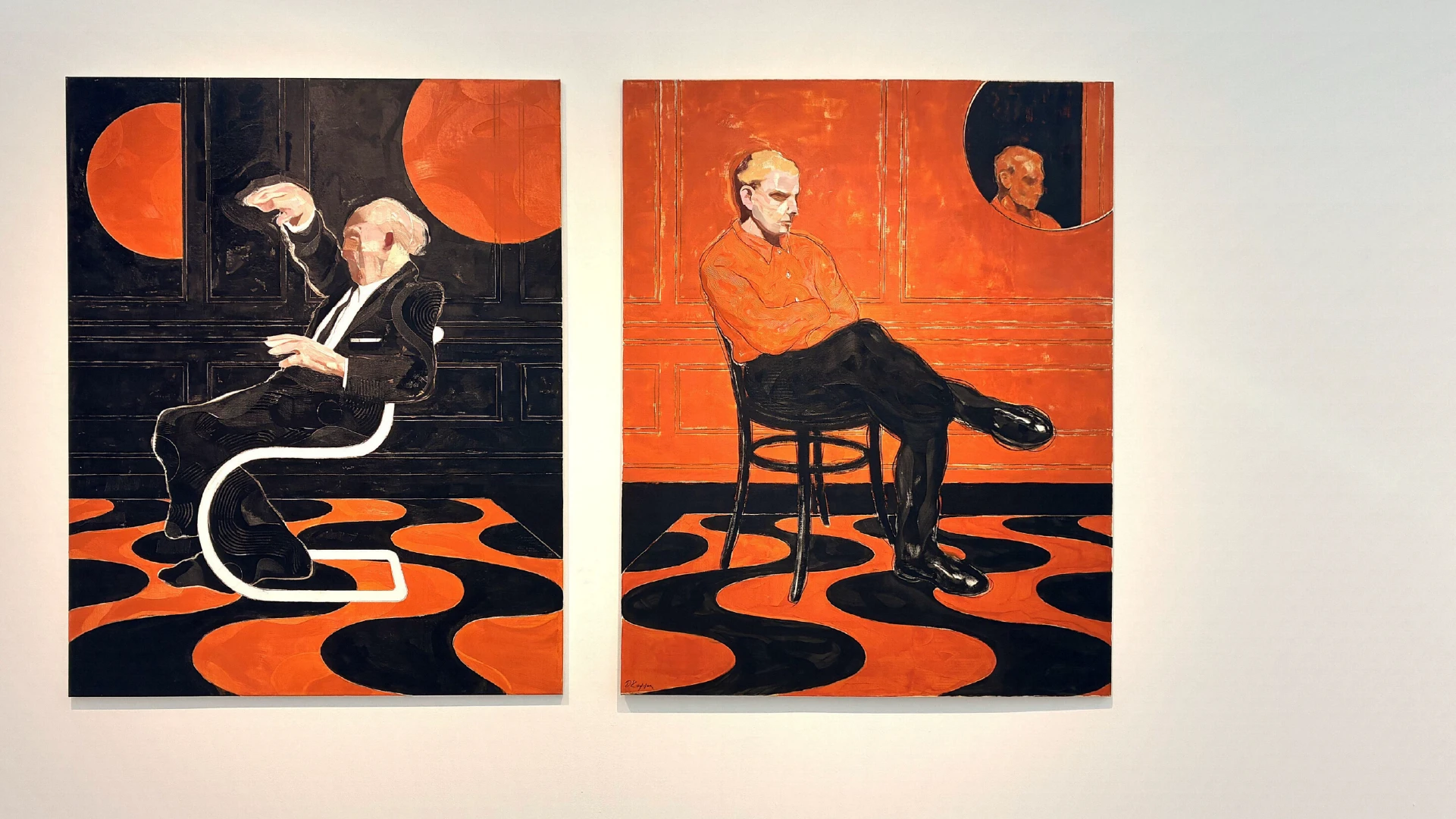
Fernando O’Connor, "Prestidigitador (MR)” and "Reflejo".
Courtesy of the artist.
The Human Fable: Between Movement and Stillness
Art
Contemporary
Art Gallery
Argentine artist Fernando O’Connor presents his latest series titled The Human Fable, where he approaches corporeality through an oscillation between movement and stillness.
author
Luciana Trost
Date
Share
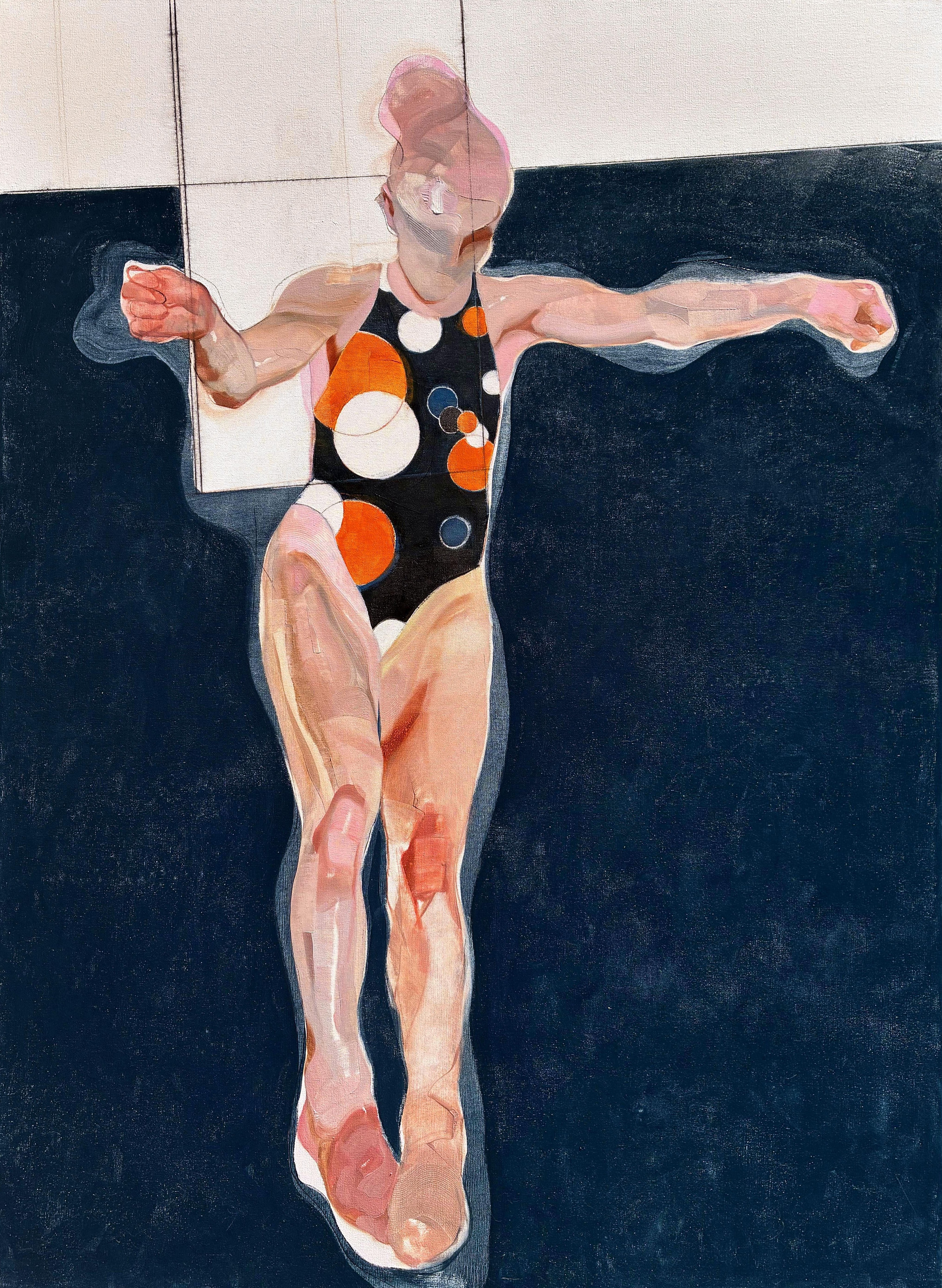
Fernando O’Connor, "Bañista”. Courtesy of the artist.
Something immediately commands attention when first entering the works of the series The Human Fable by Fernando O’Connor. It is a certain presence, an aura, that points us along a path, an approach to a world that could well be that of dreams, with characters suspended in an unknown space-time, without defined faces yet with precise attitudes—a play between the symbolic and the figurative—that reveal a deep need to tell us something, like frames from Twin Peaks by David Lynch or even from some films by Charlie Kaufman, to cite a few cinematic references. There is no necessarily precise distinction in the figures of those bodies or faces. Rather, it is the brushstrokes that configure and delineate the silhouettes and the situations in which they are found.
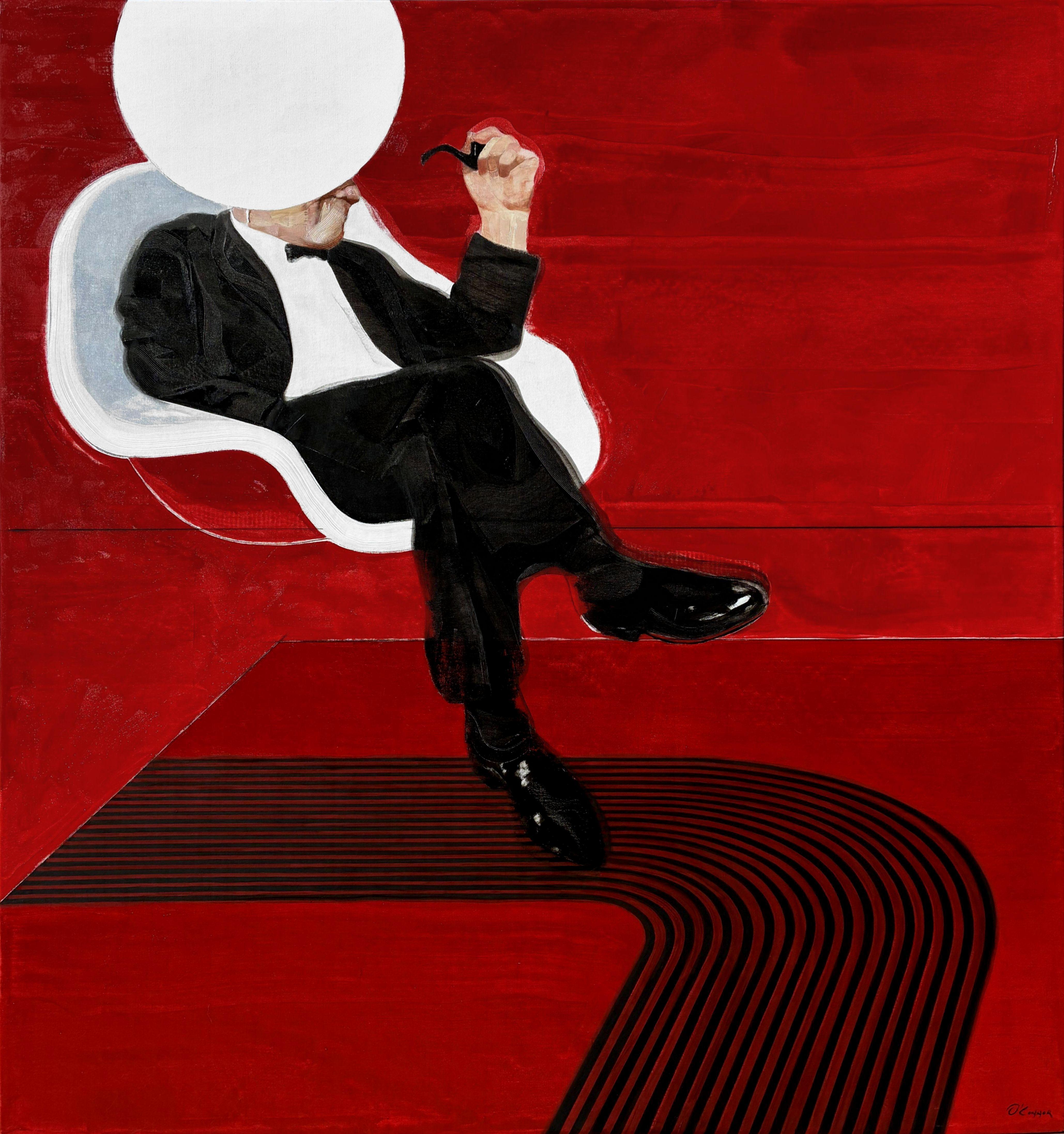
Fernando O’Connor, “Hombre con lámpara".
Courtesy of the artist.
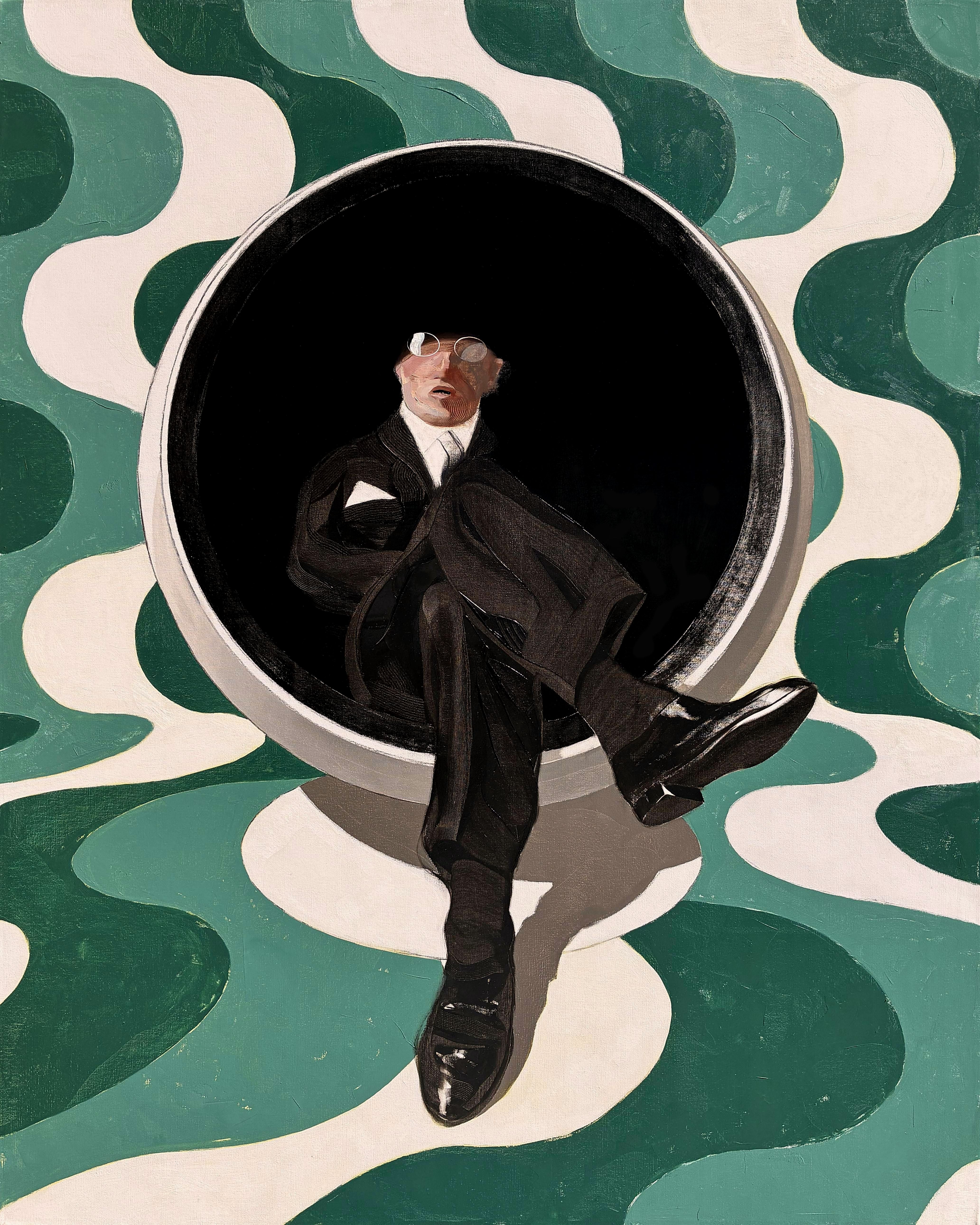
Fernando O’Connor, “Regnum Hominis”.
Courtesy of the artist.
The series is markedly defined by the contrast between movement and stillness. Elegantly dressed human figures, seated in the iconic MR, Tonnet, Ball Chair, and DAX chairs, with undefined appearances or concealed faces (as if in a dreamlike environment, a hallucination?), are placed on what could be carpets, walls, or simply backgrounds of vibrant colors—such as crimson reds, oranges, and bluish greens—with patterns that recall the psychedelic aesthetics of the 1960s, and with suggestively meditative, contemplative attitudes. In contrast to the rest or calm present in these works, O’Connor proposes movement through athletic bodies, dressed in what could be sportswear, such as swimsuits or shorts typical of swimming or track and field. The sixties aesthetic also appears here, no longer only in the environment surrounding the figures but in their garments themselves. Bodies are suspended, without gravity—as if floating in the atmosphere—or seem to stumble clumsily, despite their vigorous physical states.
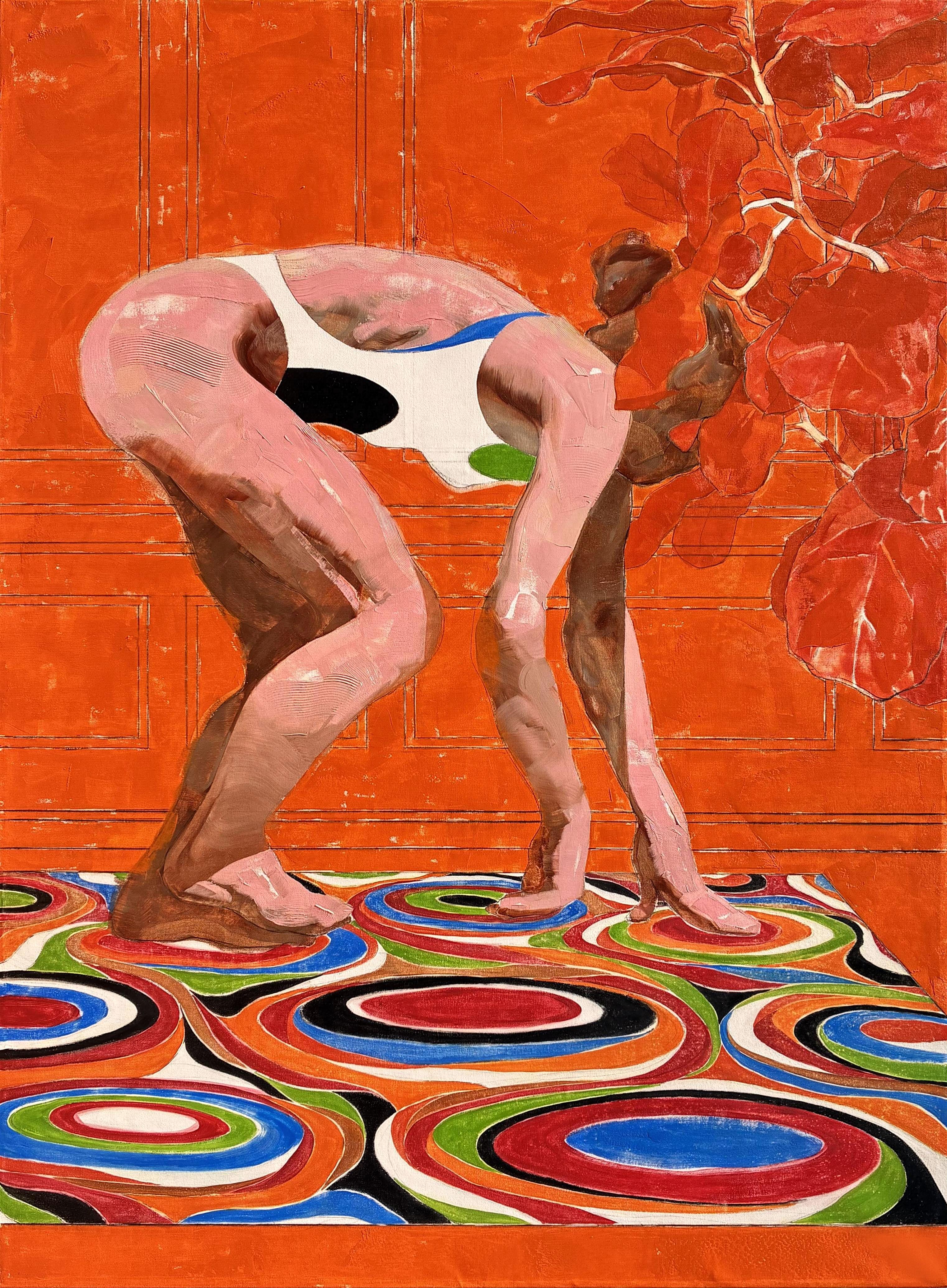
Fernando O’Connor, “Carpet crowler”.
Courtesy of the artist.
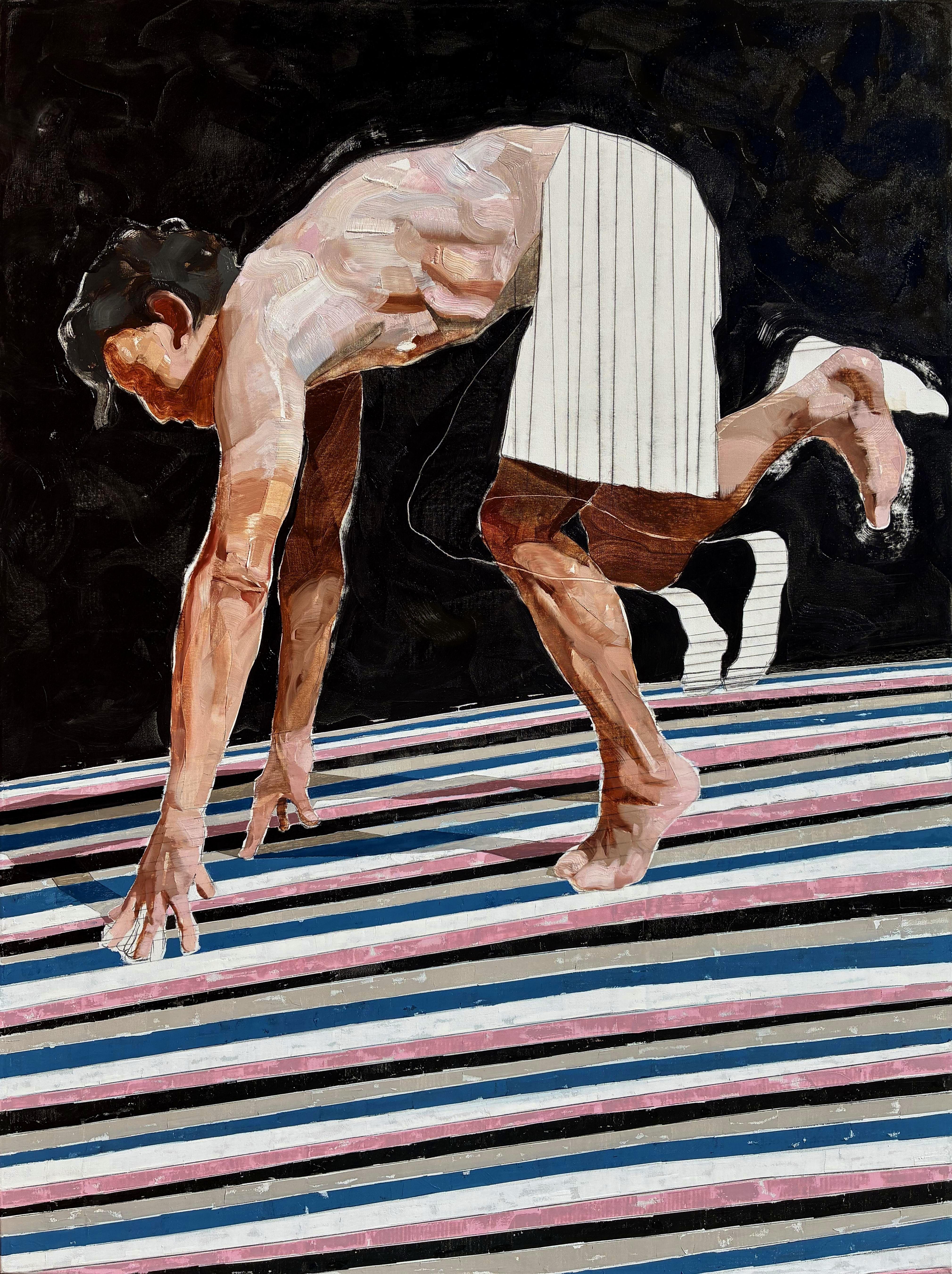
Fernando O’Connor, "La Caída".
Courtesy of the artist.
The collection produces a sense of estrangement regarding what is seen, allowing for the formulation of a question about reality, which is undoubtedly one of the aims of art. In this sense, given that this series of portraits titled The Human Fable reminds us of the human condition per se insofar as we are constituted not only by reason but also by a body, it seems fitting to bring in the well-known concept of Cartesian dualism: Res Cogitans (mind, soul) to point to the works that suggest stillness or stasis, and Res Extensa (body, matter) for those that emphasize corporeality and movement. Is it possible, then, to have an intellect without a body or a body without a mind? Evidently not, and if it were, human essence would not be constituted. In this way, the totality of the works and the combination of both categories establish and affirm the necessary interaction and alternation of the states of soul and matter, without which, we would argue, existence itself, our being-in-the-world (Dasein), The Human Fable, would not be possible.
Share