FILM REVIEWS

FILM REVIEWS

Linger on () Perfect Days, by Wim Wenders

Linger on (…) Perfect Days, by Wim Wenders

Alpha Centauri

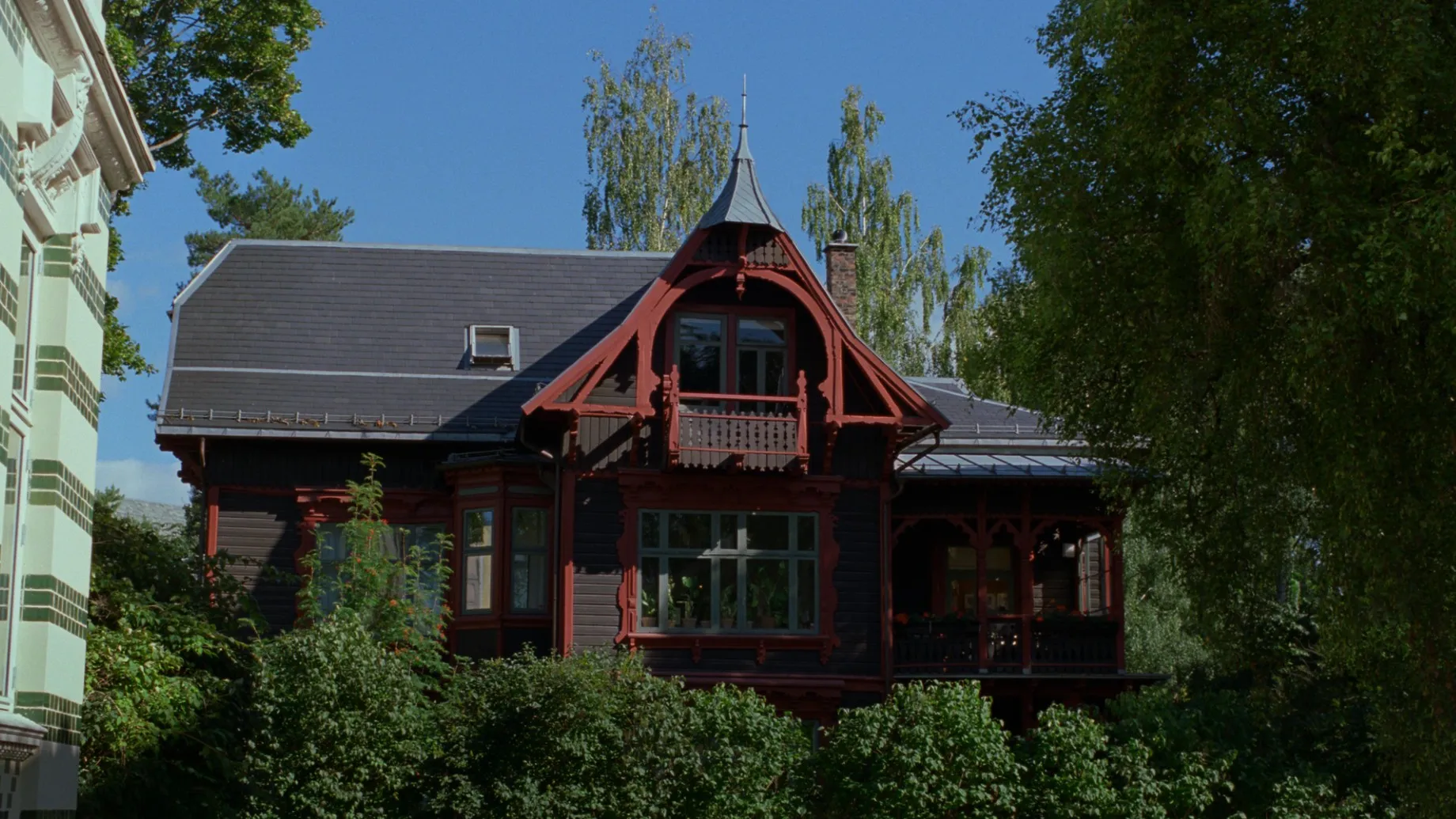
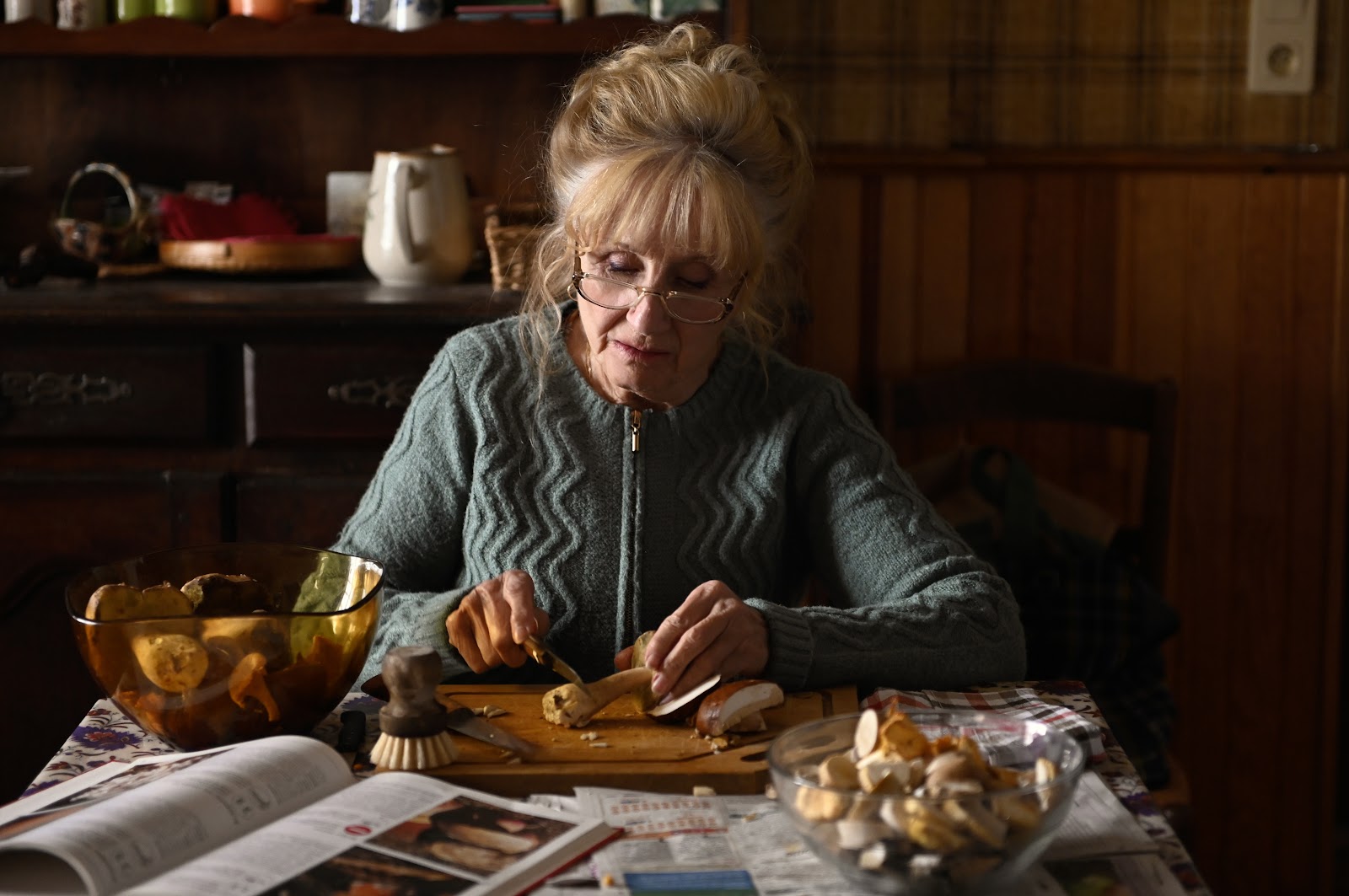
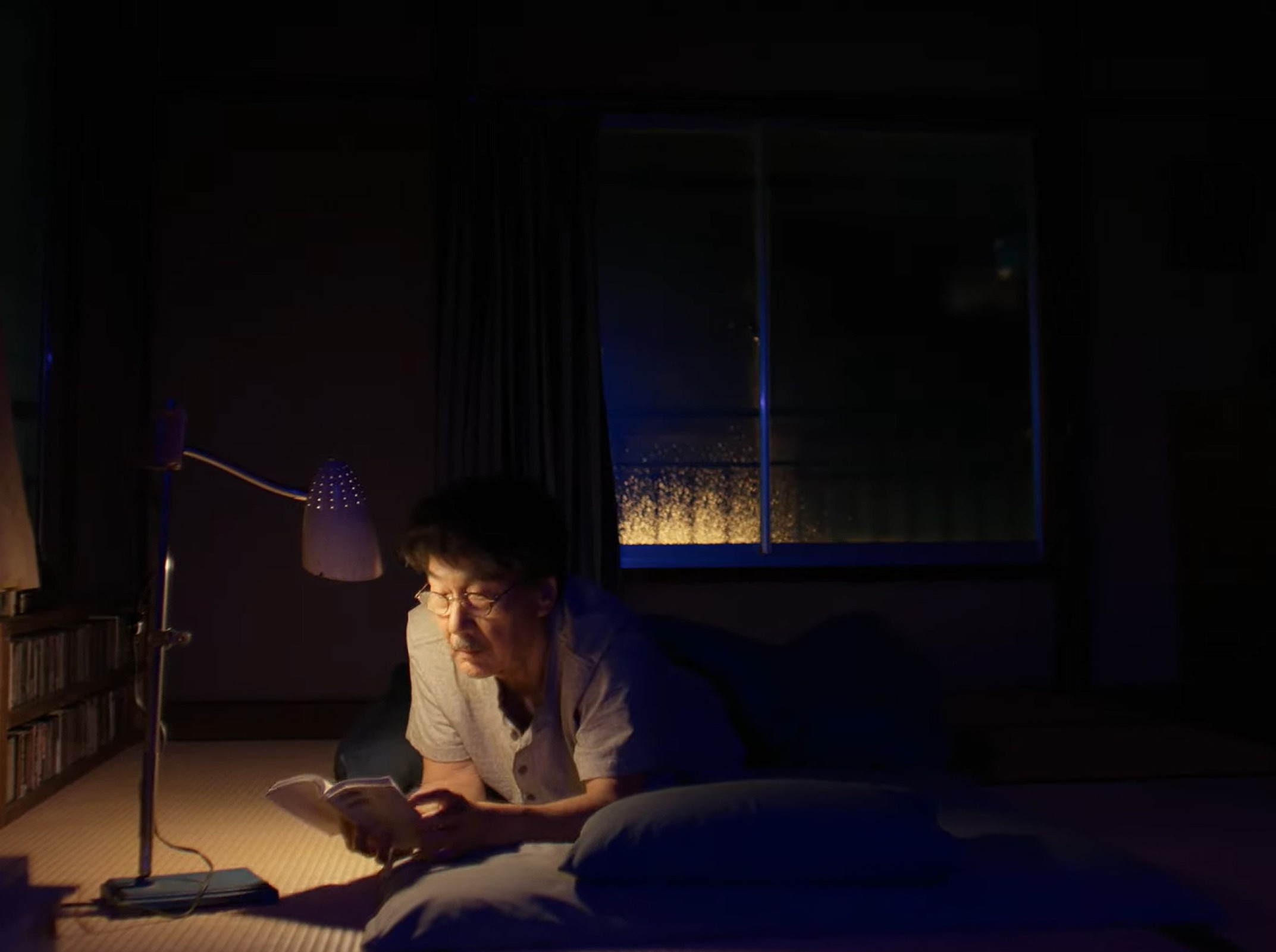
Stills from Perfect Days (2023), directed by Wim Wenders. © Master Mind Ltd. / Spoon Inc. / Wim Wenders Stiftung.

Alpha Centauri

Stills from Perfect Days (2023), directed by Wim Wenders. © Master Mind Ltd. / Spoon Inc. / Wim Wenders Stiftung.

The latest film by Wim Wenders is an ode to simplicity, slowness, the scent of time, to quote Byung-Chul Han, to Eastern culture and to the beauty found in their convergence.

The latest film by Wim Wenders is an ode to simplicity, slowness, the scent of time, to quote Byung-Chul Han, to Eastern culture and to the beauty found in their convergence.

Author

Luciana Trost

Date

December 10, 2025

Share 

This short review is delayed. That delay mirrors the latest film by Wim Wenders, about which we will share a few thoughts. In line with what resonates in Perfect Days, we give space to that delay and to writing discontinuously, without trying to keep pace with theatrical releases. Perfect Days explores, through the singularity of its protagonist, the notion of slowness, waiting and a sense of personal time that is detached from monotony and from the repetition of the linear chronological time imposed by modern societies.

One might already consider it somewhat outdated to revisit an analysis of time in modernity or postmodernity. Yet it remains necessary. It is even necessary to dissect this notion thoroughly, to analyze it in depth because, paradoxically, the more we study our contemporary societies and their distance from what is essential to the human condition, the more new technologies emerge, the more hypercommunication intensifies and the more we sink into the mediocre, the vulgar and the superficial. In this sense, Heidegger and many contemporary philosophers seem justified in pointing out that no real progress is possible.
This short review is delayed. That delay mirrors the latest film by Wim Wenders, about which we will share a few thoughts. In line with what resonates in Perfect Days, we give space to that delay and to writing discontinuously, without trying to keep pace with theatrical releases. Perfect Days explores, through the singularity of its protagonist, the notion of slowness, waiting and a sense of personal time that is detached from monotony and from the repetition of the linear chronological time imposed by modern societies.

One might already consider it somewhat outdated to revisit an analysis of time in modernity or postmodernity. Yet it remains necessary. It is even necessary to dissect this notion thoroughly, to analyze it in depth because, paradoxically, the more we study our contemporary societies and their distance from what is essential to the human condition, the more new technologies emerge, the more hypercommunication intensifies and the more we sink into the mediocre, the vulgar and the superficial. In this sense, Heidegger and many contemporary philosophers seem justified in pointing out that no real progress is possible.

This short review is delayed. That delay mirrors the latest film by Wim Wenders, about which we will share a few thoughts. In line with what resonates in Perfect Days, we give space to that delay and to writing discontinuously, without trying to keep pace with theatrical releases. Perfect Days explores, through the singularity of its protagonist, the notion of slowness, waiting and a sense of personal time that is detached from monotony and from the repetition of the linear chronological time imposed by modern societies.

One might already consider it somewhat outdated to revisit an analysis of time in modernity or postmodernity. Yet it remains necessary. It is even necessary to dissect this notion thoroughly, to analyze it in depth because, paradoxically, the more we study our contemporary societies and their distance from what is essential to the human condition, the more new technologies emerge, the more hypercommunication intensifies and the more we sink into the mediocre, the vulgar and the superficial. In this sense, Heidegger and many contemporary philosophers seem justified in pointing out that no real progress is possible.

La pepino series II
La pepino series II
La pepino series II
La pepino series II
La pepino series II
La pepino series II
La pepino series II
La pepino series II

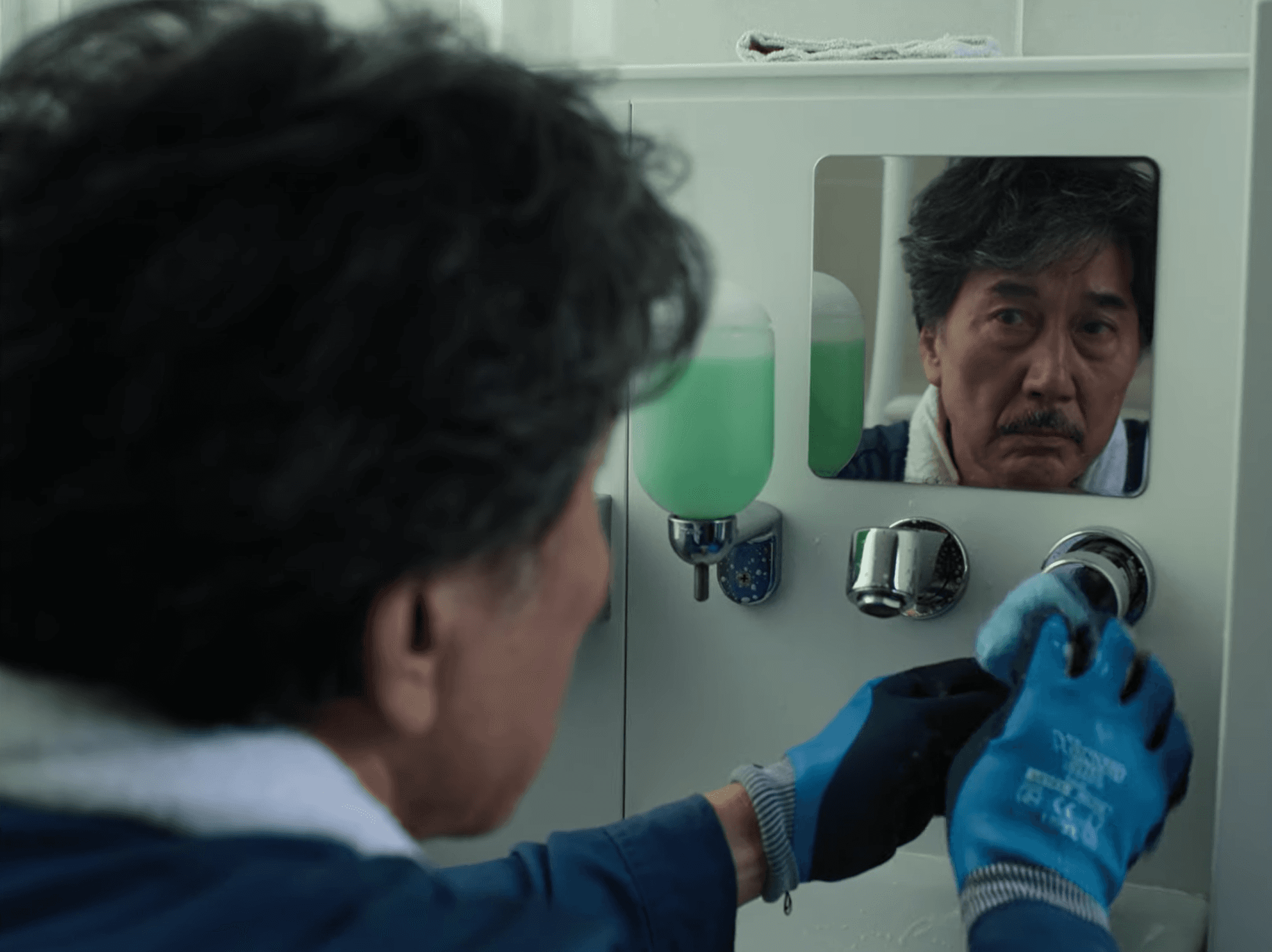
Stills from Perfect Days (2023), directed by Wim Wenders. © Master Mind Ltd. / Spoon Inc. / Wim Wenders Stiftung.

Stills from Perfect Days (2023), directed by Wim Wenders. © Master Mind Ltd. / Spoon Inc. / Wim Wenders Stiftung.

The film follows the story of Hirayama, a protagonist who works for a company that cleans public restrooms in Tokyo. His routine repeats day after day and Hirayama follows it precisely, with some variations of course, since absolute repetition is impossible. Yet contrary to what might be perceived as forced, unhealthy or undesirable work, Hirayama takes genuine pleasure in the everydayness of his job. He wakes up at the same early hour in his modest, well cared for and tidy home, makes his coffee, gets in his van, visits restrooms in different neighborhoods and cleans each facility meticulously alongside his coworker Takashi.

The film follows the story of Hirayama, a protagonist who works for a company that cleans public restrooms in Tokyo. His routine repeats day after day and Hirayama follows it precisely, with some variations of course, since absolute repetition is impossible. Yet contrary to what might be perceived as forced, unhealthy or undesirable work, Hirayama takes genuine pleasure in the everydayness of his job. He wakes up at the same early hour in his modest, well cared for and tidy home, makes his coffee, gets in his van, visits restrooms in different neighborhoods and cleans each facility meticulously alongside his coworker Takashi.

The film follows the story of Hirayama, a protagonist who works for a company that cleans public restrooms in Tokyo. His routine repeats day after day and Hirayama follows it precisely, with some variations of course, since absolute repetition is impossible. Yet contrary to what might be perceived as forced, unhealthy or undesirable work, Hirayama takes genuine pleasure in the everydayness of his job. He wakes up at the same early hour in his modest, well cared for and tidy home, makes his coffee, gets in his van, visits restrooms in different neighborhoods and cleans each facility meticulously alongside his coworker Takashi.

Perfect Days explores the notion of delay and personal time, detached from the monotony and repetitive nature of the linear, chronological time imposed by modernity.

Perfect Days explores the notion of delay and personal time, detached from the monotony and repetitive nature of the linear, chronological time imposed by modernity.

Perfect Days explores the notion of delay and personal time, detached from the monotony and repetitive nature of the linear, chronological time imposed by modernity.

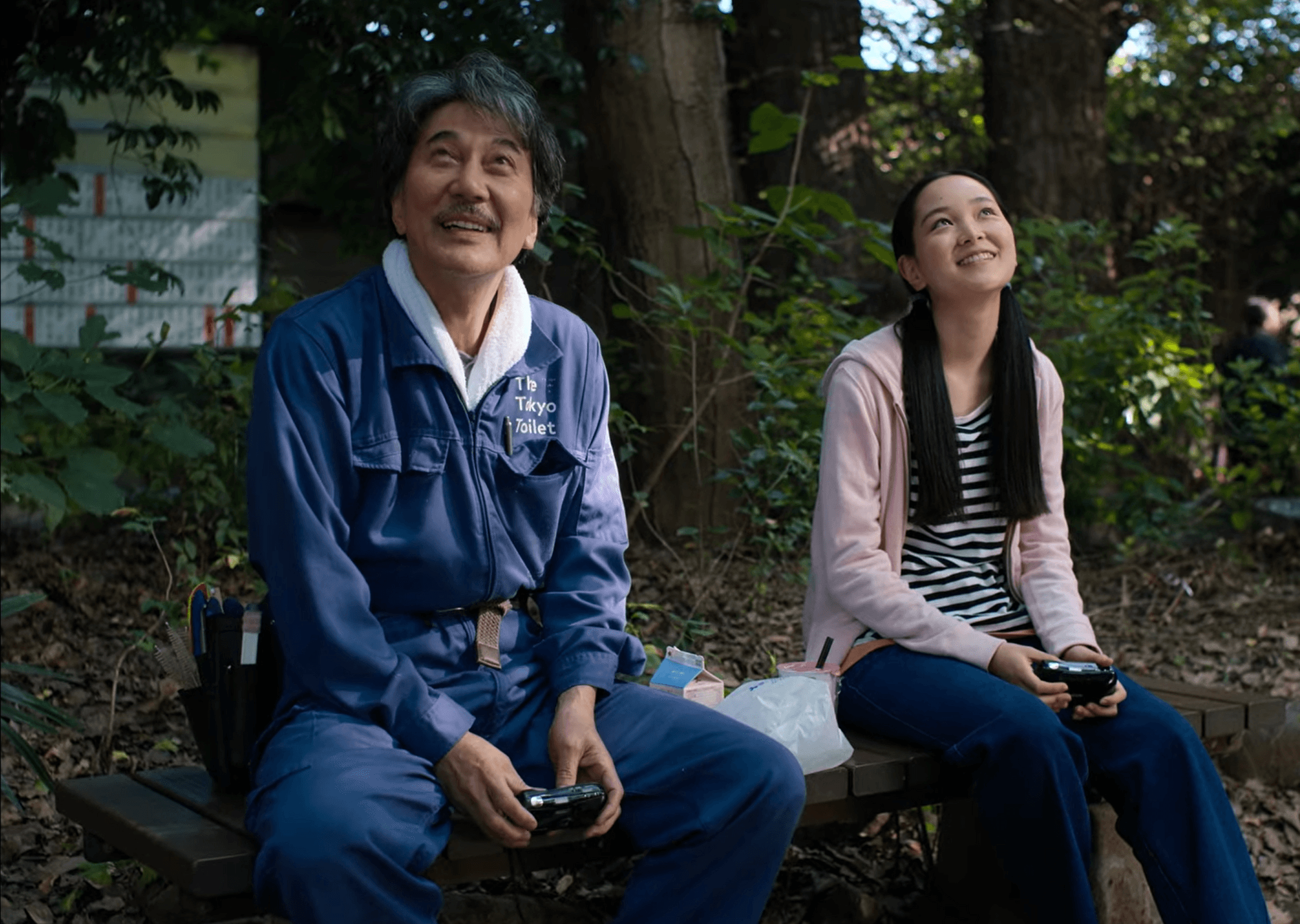
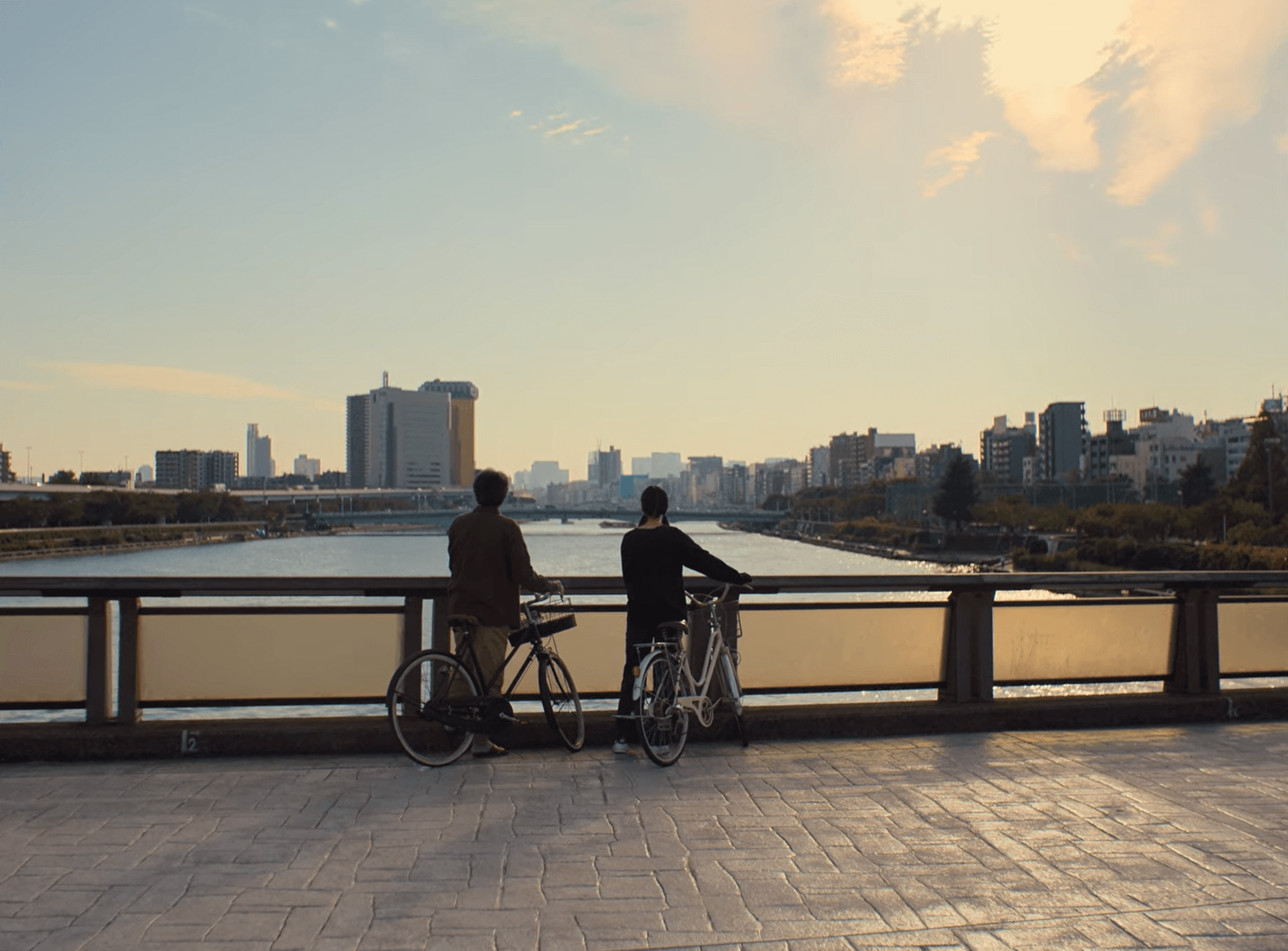
The monotony of his days is interrupted by the unexpected arrival of his niece, whom he finds at his doorstep and who decides to stay with him, accompanying him in his daily routine. Hirayama’s sister, the young woman’s mother, also appears suddenly when she comes to look for her daughter. Although we are not given details about the reason for the apparent distance between the siblings, the presence of love is evident in their embrace and in their glassy eyes.
The monotony of his days is interrupted by the unexpected arrival of his niece, whom he finds at his doorstep and who decides to stay with him, accompanying him in his daily routine. Hirayama’s sister, the young woman’s mother, also appears suddenly when she comes to look for her daughter. Although we are not given details about the reason for the apparent distance between the siblings, the presence of love is evident in their embrace and in their glassy eyes.

The monotony of his days is interrupted by the unexpected arrival of his niece, whom he finds at his doorstep and who decides to stay with him, accompanying him in his daily routine. Hirayama’s sister, the young woman’s mother, also appears suddenly when she comes to look for her daughter. Although we are not given details about the reason for the apparent distance between the siblings, the presence of love is evident in their embrace and in their glassy eyes.

Stills from Perfect Days (2023), directed by Wim Wenders. © Master Mind Ltd. / Spoon Inc. / Wim Wenders Stiftung.


Wenders immerses us in a story with suggestive songs, few words, and many poetic images.

Wenders immerses us in a story with suggestive songs, few words, and many poetic images.

Wenders immerses us in a story with suggestive songs, few words, and many poetic images.

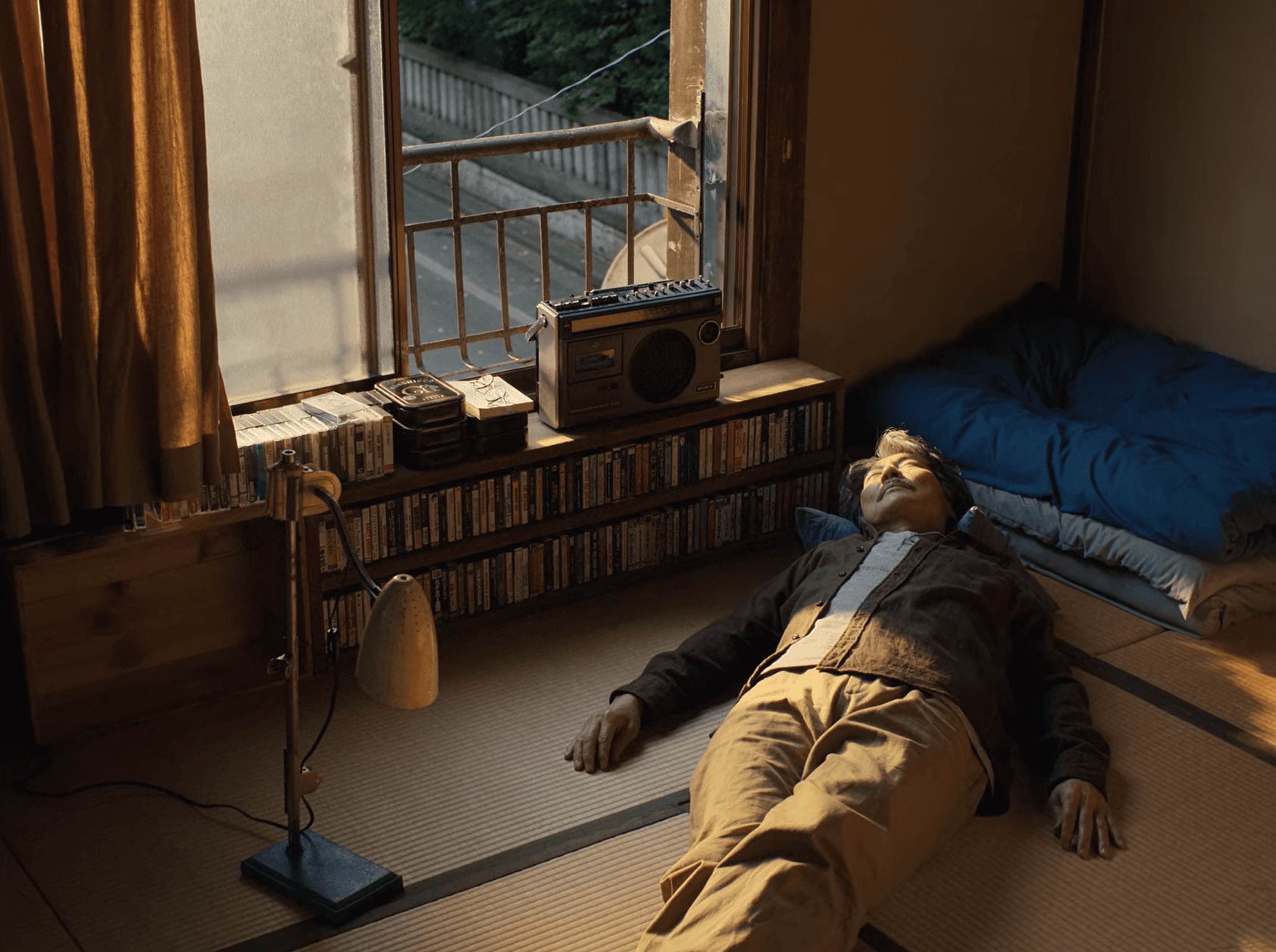
Other events introduce new intervals in Hirayama’s days. The ex-husband of the cook at the restaurant he frequents appears, a terminally ill man who forms a bond of friendship with him. In addition, a young woman friend of his coworker shows him how to use the Spotify music app, which Hirayama prefers to avoid, continuing instead to listen to his favorite artists on cassette tapes. Songs by Lou Reed, The Velvet Underground and The Rolling Stones play through the tape player in his van.

Wenders places us in a story with evocative songs, few words and many poetic images. The Japanese notion of komorebi appears, referring to sunlight filtering through the leaves of a tree and the resulting shadows. The film reminds us, as if that were not enough, of the need to return to what is essential and simple for human life in a world that is increasingly complex and liquid, in Bauman’s terms, a world that demands constant change without leaving room for stillness and where haste, chaos and individualism prevail.

“The violin freezes, the dancer delays” is a line from a poem by Goethe that Martin Heidegger highlighted in one of his writings on the notion of time, not clock time, and that the philosopher Byung-Chul Han also cites in his book The Scent of Time, published in 2015. When we pause, when we allow slowness, everything takes on a different meaning. We can see, hear and think in new ways. Lou Reed sings something similar in a line from one of the songs heard in Perfect Days: Linger on your pale blue eyes.

Other events introduce new intervals in Hirayama’s days. The ex-husband of the cook at the restaurant he frequents appears, a terminally ill man who forms a bond of friendship with him. In addition, a young woman friend of his coworker shows him how to use the Spotify music app, which Hirayama prefers to avoid, continuing instead to listen to his favorite artists on cassette tapes. Songs by Lou Reed, The Velvet Underground and The Rolling Stones play through the tape player in his van.

Wenders places us in a story with evocative songs, few words and many poetic images. The Japanese notion of komorebi appears, referring to sunlight filtering through the leaves of a tree and the resulting shadows. The film reminds us, as if that were not enough, of the need to return to what is essential and simple for human life in a world that is increasingly complex and liquid, in Bauman’s terms, a world that demands constant change without leaving room for stillness and where haste, chaos and individualism prevail.

“The violin freezes, the dancer delays” is a line from a poem by Goethe that Martin Heidegger highlighted in one of his writings on the notion of time, not clock time, and that the philosopher Byung-Chul Han also cites in his book The Scent of Time, published in 2015. When we pause, when we allow slowness, everything takes on a different meaning. We can see, hear and think in new ways. Lou Reed sings something similar in a line from one of the songs heard in Perfect Days: Linger on your pale blue eyes.

Share 

Film credits

Original title

Perfect Days

Year

2023

COUNTRY

Japan

Director

Wim Wenders

Screenplay

Takuma Takasaki, Wim Wenders

Cast

Kôji Yakusho, Arisa Nakano, Tokio Emoto, Yumi Asou, Sayuri Ishikawa, Tomokazu Miura, Aoi Yamada, Min Tanaka.

Cinematography

Franz Lustig

Production companies

Japan–Germany co-production; Master Mind Limited, Wim Wenders Productions

Distributor

Master Mind Ltd. / Spoon Inc. / Wim Wenders Stiftung.

⁠Genre

Thriller, Drama | Work/EmploymentThriller, Drama | Work/Employment